[ad_1]
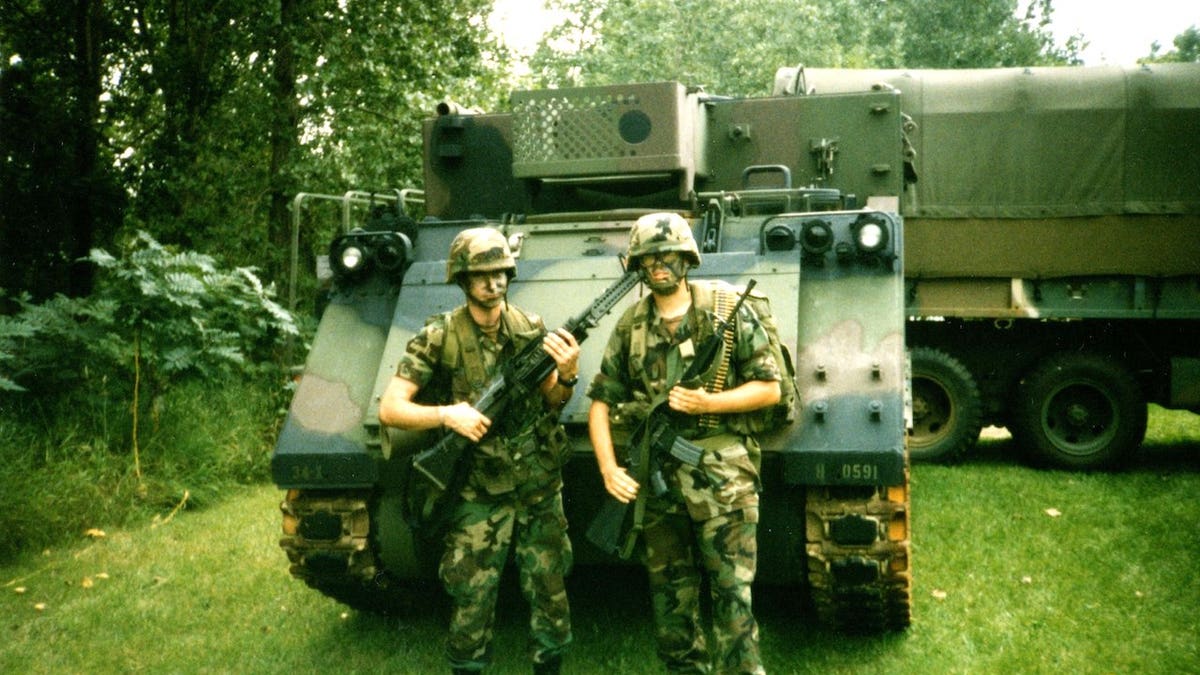
After 17 years of serving his country, Mark Kelm is now providing a different type of service: He’s advocating for others who, like him, are living with Parkinson’s disease (PD).
Kelm, who lives in a small Minnesota town with his wife of 23 years and three children, was just 38 years old when he was diagnosed with PD, a nervous system disorder that causes tremors, stiffness, loss of balance and other movement issues.
He credits his military background for preparing him for this latest challenge.
WHAT IS PARKINSON’S DISEASE? SYMPTOMS, CAUSES, WAYS TO COPE WITH DIAGNOSIS
“I believe the times that I had in the military really prepared me to handle living with a disease like Parkinson’s — knowing how to adapt and overcome in any given circumstance,” he told Fox News Digital in an interview.
“And I think those life skills that I learned in the Army are still quite useful today.”
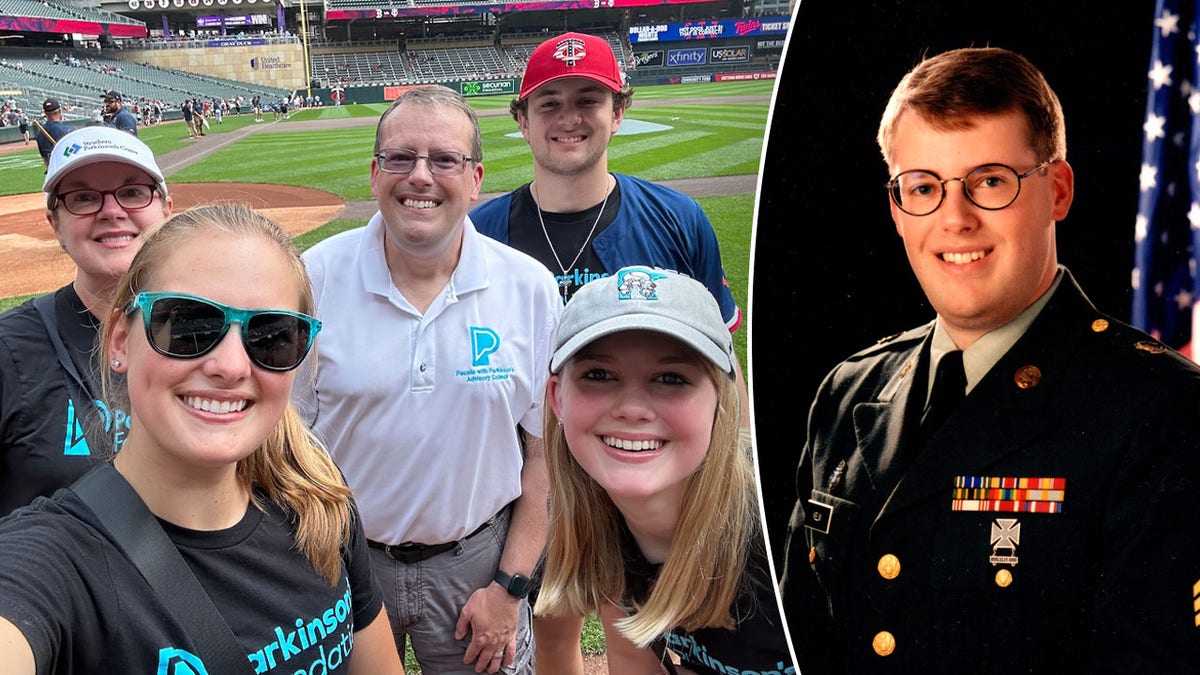
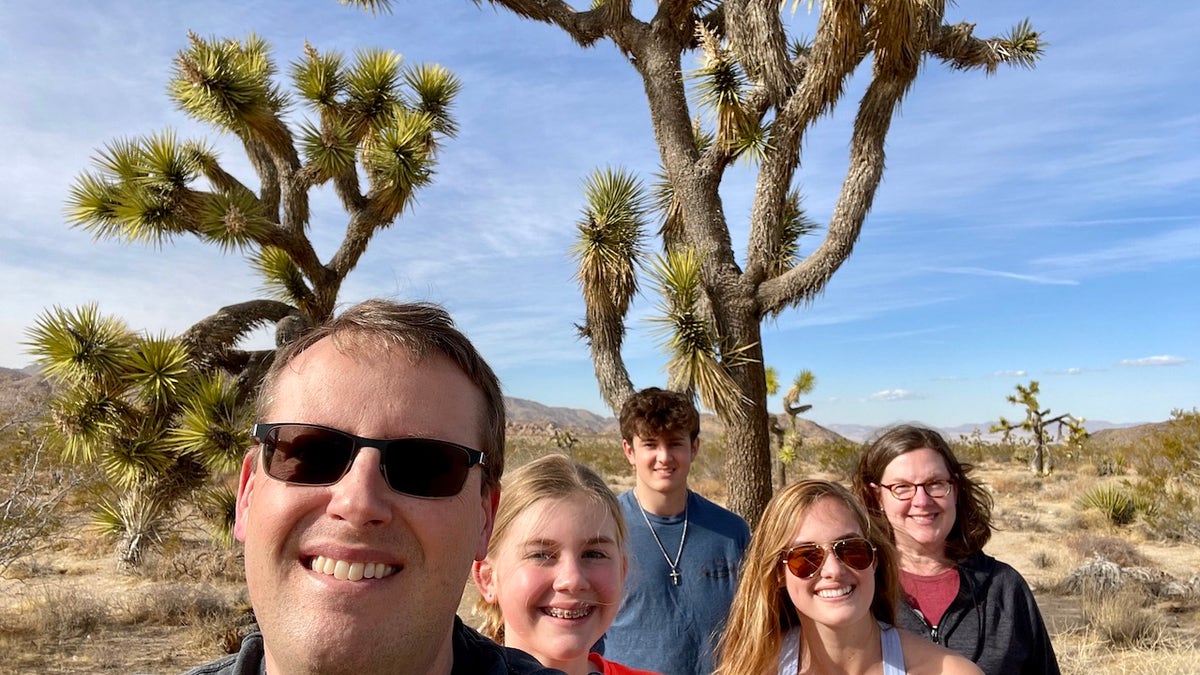
After 17 years of serving his country, Mark Kelm is now providing a different type of service: He’s advocating for others who, like him, are living with Parkinson’s disease. He’s shown in the family picture at left, center, plus on the right. (Mark Kelm)
Surprise diagnosis
Raised by a police deputy and a nurse, Kelm said that for as long as he can remember, his life has been geared toward service.
Since enlisting in the Army Reserves in 1989, Kelp has served many years of active duty, spent time in the National Guard and held a role as a military chaplain.
In 2006, Kelm transitioned to a role as a chaplain for a federal law enforcement agency.
Two years later, at just 38, he was alarmed when he started experiencing involuntary twitching.
RESEARCHERS FIND SOURCES OF FOUR BRAIN DISORDERS, WHICH COULD LEAD TO NEW TREATMENTS
“One muscle in my arm kept twitching, and it was causing my finger to twitch as well, and it just wouldn’t stop,” he recalled.
That began Kelm’s journey toward a diagnosis of young-onset Parkinson’s, which he received at the Mayo Clinic’s neurology department in Minnesota.
“That was a pretty dark day — knowing that it’s a progressive, degenerative neurological disorder that currently does not have a cure or any disease-modifying drugs,” he said.
Mark Kelm, pictured at right, enlisted in the Army Reserves in 1989 and served for many years in active duty. (Mark Kelm)
“As a chaplain, I performed funerals for people who had died from complications of Parkinson’s. So I was very familiar with some of the end-stage aspects of the disease.”
Kelm started taking Levodopa, a central nervous system drug that helps to manage Parkinson’s motor symptoms.
“I believe the times that I had in the military really prepared me to handle living with a disease like Parkinson’s.”
For eight years, he “stayed quiet” on the disease. In 2016, he said, “It was affecting me enough that I no longer could hide it.”
That’s when Kelm retired from full-time work — but his next chapter was just beginning.
New form of service
“After having my own little pity party after my diagnosis, I realized that wasn’t really helpful,” he said.
Kelm’s older daughter, who was in high school at the time, immediately started researching his disease. She soon became involved with fundraising and awareness efforts through the Parkinson’s Foundation.

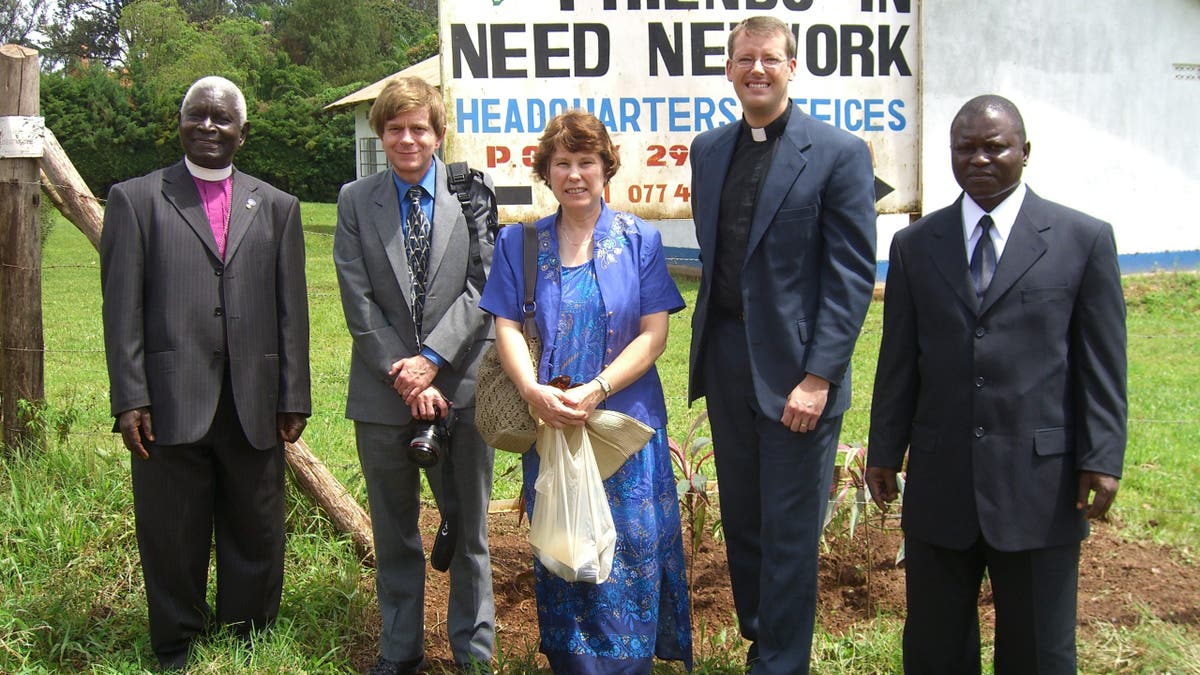
Kelm, at right, is pictured on a mission trip to Uganda in 1998 while he was serving as a military chaplain. (Mark Kelm)
He was so impressed by his daughter’s efforts that he decided it was time to “get off the bench and get back into the game.”
Kelm has since “jumped in with both feet.”
He became the national chair of the Parkinson’s Foundation People with Parkinson’s Council, which ensures that the perspective of people living with PD is integrated into the foundation’s program development.
PARKINSON’S DISEASE SYMPTOMS DISAPPEARED WITH EXERCISE, MAN CLAIMS: ‘USE IT OR LOSE IT’
In 2020, Kelm helped create an annual Parkinson’s Awareness Day at Target Field, in partnership with the Minnesota Twins.
He has also organized events to raise funds for the Minneapolis-based Struthers Parkinson’s Center, and volunteers on the U.S. Department of Defense’s medical research programs for Parkinson’s.
“My service is connected to Parkinson’s now,” Kelm told Fox News Digital.
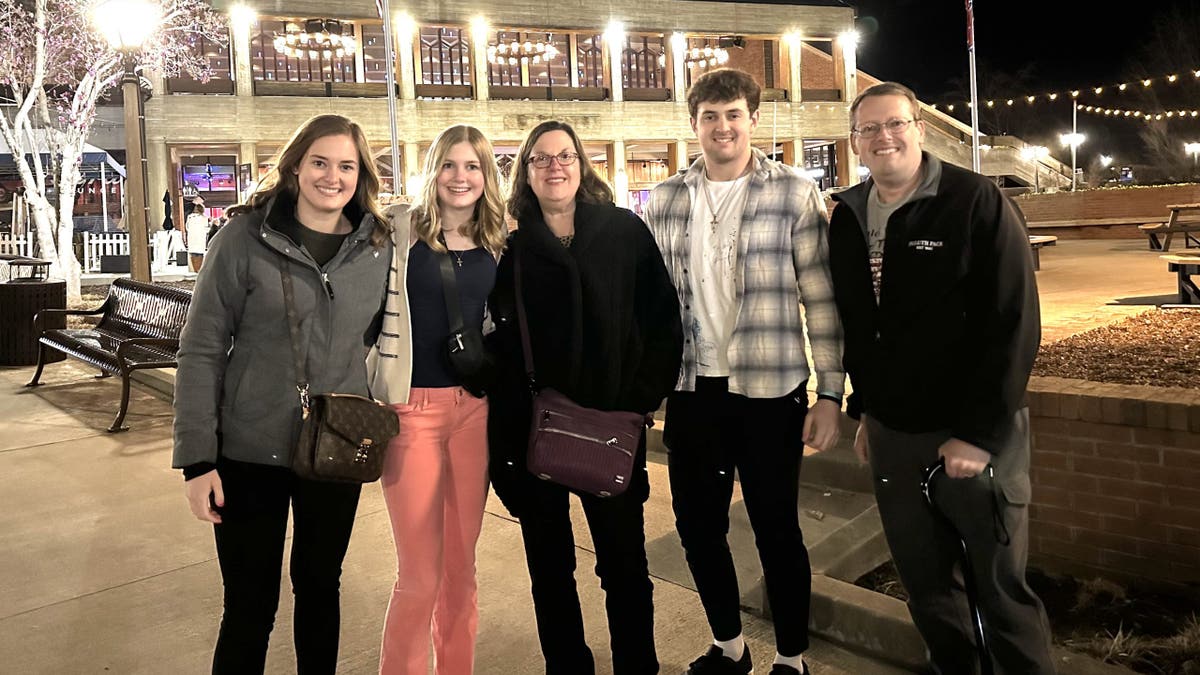
Kelm, at far right, is pictured with his family during a visit to the Grand Ole Opry in Nashville, Tennessee. (Mark Kelm)
“It has been an absolute blessing, because it’s allowed me to meet people from all around this great nation and even the world,” he went on.
“It’s been very positive for me, and I’m very hopeful that there’s a lot of research being done right now.”
Kelm’s advocacy could also indirectly benefit his health, according to Dr. James Beck, PhD, chief scientific officer for the Parkinson’s Foundation in New York City.
“My service is connected to Parkinson’s now.”
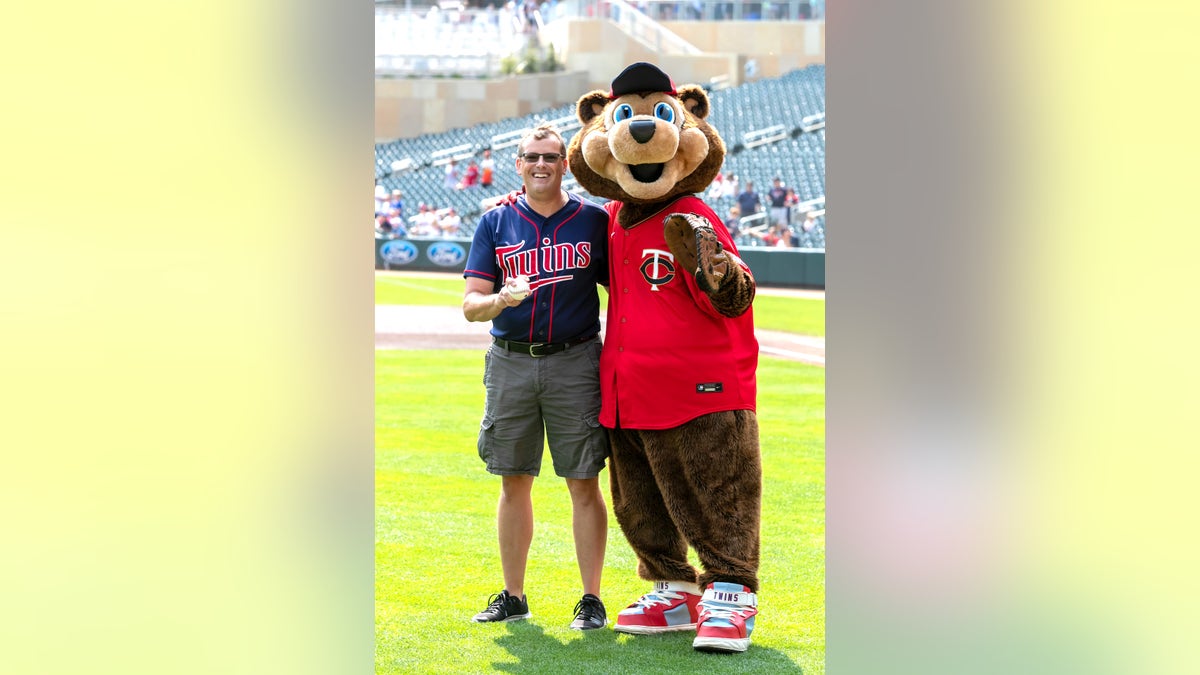
In 2020, Kelm helped to create an annual Parkinson's Awareness Day at Target Field, in partnership with the Minnesota Twins. (Mark Kelm)
"People with EOPD typically have a much slower rate of progression of their disease than those diagnosed at an older age," Beck noted.
Younger patients, however, are more likely to notice stiffness earlier in the course of the disease.
"They will often experience dystonia (e.g., cramping of a hand or toes) as an early symptom," Beck said.
Patients with early-onset disease will also often experience levodopa-induced dyskinesia (involuntary movements of body parts) more frequently than those diagnosed after the age of 50, according to Beck.
Kelm said he does experience dyskinesia from time to time.
"At first, I thought, ‘I’m going to beat this,’" he said. "And after a few years, I started having some swallowing issues, which led to choking while eating."
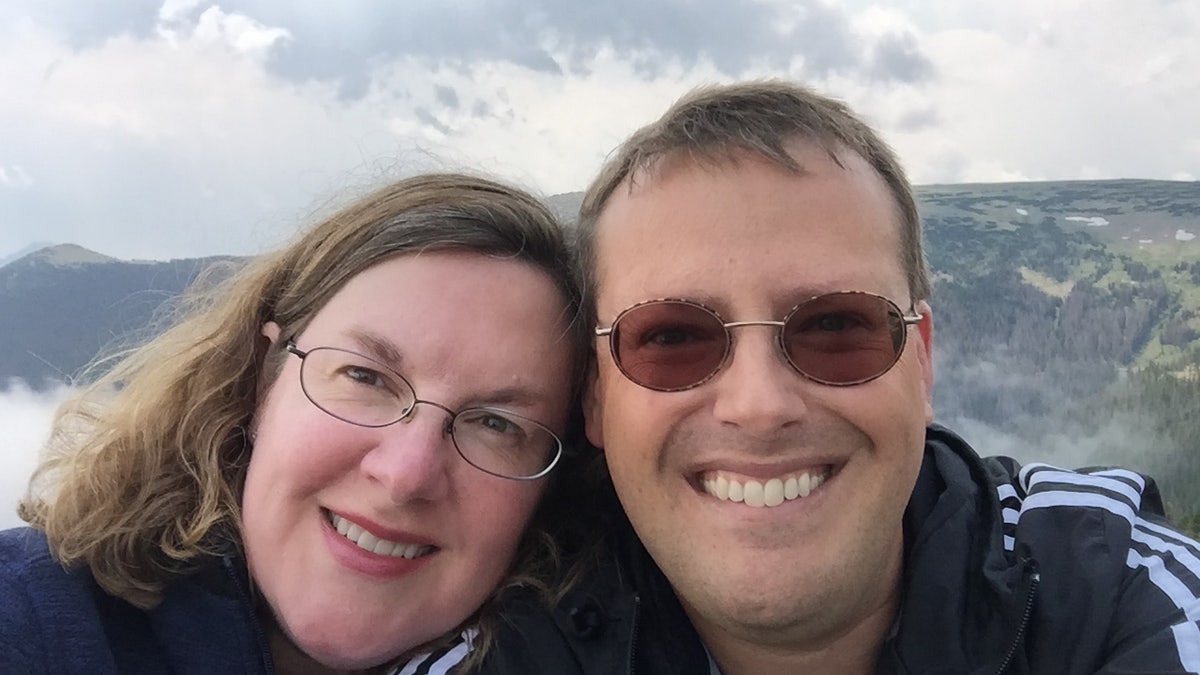
Kelm is pictured with his wife of 23 years, Beth Kelm. "She is the rock of the family. She does 99% of the work, and I go in for the 1% of glory." (Mark Kelm)
"It was a wake-up call, and an awareness that I needed to do more to manage the disease."
Coming to terms with his mortality was tough, Kelm acknowledged — but he found some comfort in knowing.
"I found peace in knowing that everything is going to be OK."
-->
“You don’t die from Parkinson’s — you die with Parkinson’s,” he said. “You die from complications of the disease, especially if you’re younger. And I found peace in knowing that everything is going to be OK.”
He added, “All of us are going to leave this earth one way or another. Some of us are given knowledge beforehand, while others are not.”
The military-Parkinson’s link
There are currently more than 110,000 veterans with Parkinson’s disease who receive care through the U.S. Department of Veterans Affairs (VA), according to the Parkinson’s Foundation.
In 2009, the Health and Medicine Division of the National Academy of Sciences, Engineering, and Medicine released a report stating that there is “suggestive but limited evidence that exposure to Agent Orange and other herbicides used during the Vietnam War is associated with an increased chance of developing Parkinson’s disease.”
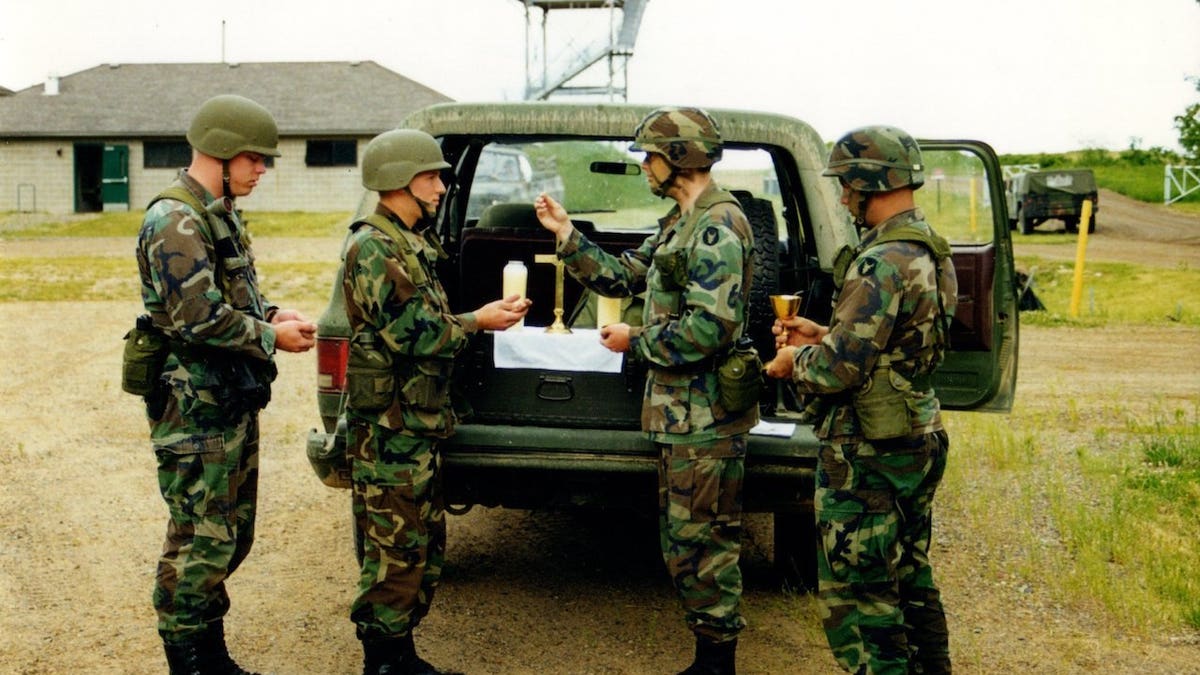
Second from right, Kelm is pictured delivering tailgate Communion while serving as a military chaplain. (Mark Kelm)
As the Parkinson’s Foundation stated, PD is a “presumptive condition for veterans who were exposed to Agent Orange and certain other toxins during military service.”
Due to this designation, veterans with Parkinson’s who were exposed to these toxins are automatically eligible to receive health care and disability benefits from the VA.
Beck of the Parkinson’s Foundation said it makes sense that there could be a link between PD and military service.
“Although I have not seen a report of a direct increase in PD after military service, given the environmental exposures of many of our service members – head trauma, solvent exposure, etc. – it would not surprise me to see a higher prevalence of PD among veterans,” he told Fox News Digital.
Kelm noted that although the U.S. veteran population is getting smaller, the Parkinson’s rate within the community is “increasing significantly.”
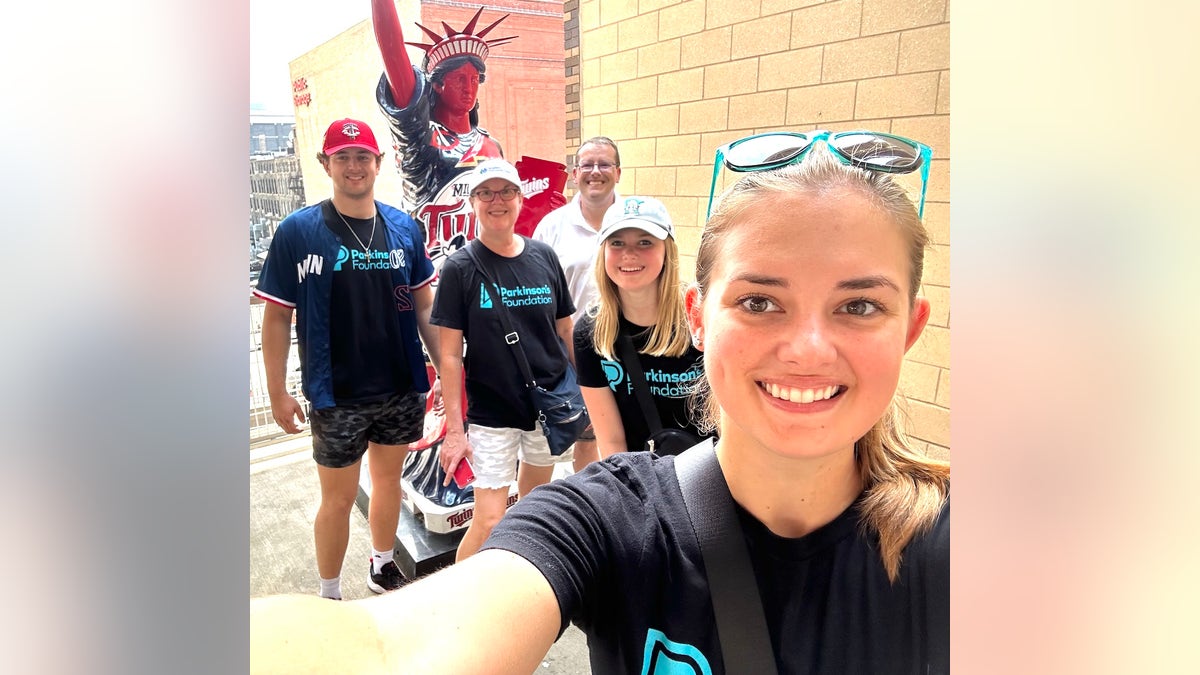
Kelm and his family are pictured at the Minnesota Twins game on Parkinson’s Awareness Day at Target Field. (Mark Kelm)
He told Fox News Digital, “I suffered two TBIs (traumatic brain injuries) in service, which the VA believes likely contributed to my Parkinson’s, along with chemical exposure.”
The Parkinson’s Foundation partnered with the VA in 2020 in an effort to improve the health, well-being and quality of life for veterans with PD and their loved ones.
Breaking the stigma
Many military veterans with Parkinson’s find it difficult to bring themselves to ask for help after so many years of supporting others. This was the case for Kelm after his diagnosis.
“As a chaplain, my job was for people to come to me — not for me to seek them out.”